
Plantar fasciitis
Irritation where the plantar fascia attaches to the heel, causing sharp heel pain, often worst in the morning.
Persistent plantar fasciitis and heel pain may be worth a closer look. Ask about our evaluation for plantar fascia embolization (PFE), an emerging option for selected patients.

Plantar fasciitis is irritation of the plantar fascia, the thick band of tissue along the bottom of your foot. It often causes sharp heel pain with the first steps in the morning or after sitting. Most plantar fasciitis gets better with stretching, supportive shoes, rest and other care.
For stubborn heel pain, plantar fascia embolization (PFE) reduces blood flow to the inflamed tissue. And because a foot sore may need a circulation check, our team can connect you with wound and vascular care when you need it.
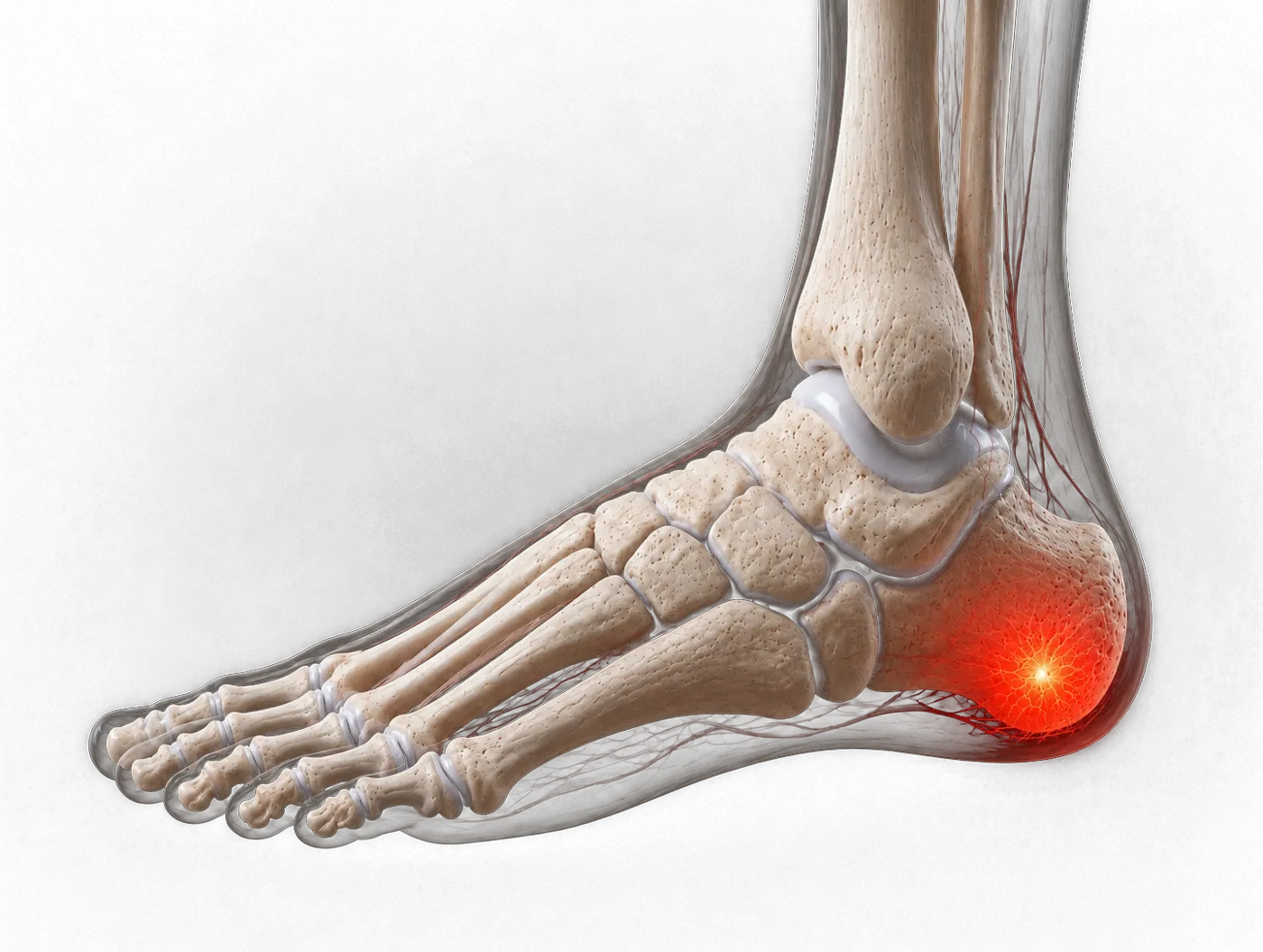
If any of these keep you from the things you enjoy, a visit can help find the cause and the options that fit you.
Irritation where the plantar fascia attaches to the heel, causing sharp heel pain, often worst in the morning.
Heel pain lasting 6 months or more despite stretching, shoe inserts, therapy or injections.
A foot sore that is slow to heal, especially with diabetes, may need a circulation check. See our Advanced Foot Wound Care Center.
Every plan starts with an evaluation. Your provider reviews your history, imaging and the treatments you have tried, then explains which options may fit.
Calf and foot stretches, supportive shoes, orthotics, night splints and physical therapy help most plantar fasciitis improve.
Who it may help: Everyone with heel pain.
Injections are part of standard care for heel pain that keeps going. Your specialist will explain the options, including PRP.
Who it may help: People whose heel pain continues despite stretching and supportive shoes.
A thin catheter is placed in an artery at the top of the thigh or near the ankle. Contrast dye shows the small arteries around the heel with extra blood flow, and tiny particles are released to reduce flow to the inflamed tissue.
Who it may help: People with heel pain for 6 months or more who have tried stretching, shoe inserts, therapy or injections and want to avoid foot surgery.
Our team checks your insurance before your visit.
We review your history, examine your foot and look at your imaging. Bring your medication list, insurance card, recent X-rays or MRI reports, and a list of treatments you have tried.
You and your specialist make a plan together, usually starting with the simplest options. We explain benefits, risks and alternatives, and if a procedure is not a good fit, we will tell you and suggest next steps. We check your insurance before anything is scheduled.
If you are a candidate, the procedure is done at our main center through a small puncture, with numbing medicine and relaxing medicine. Most people rest a few hours and go home the same day.
We check in after treatment and track your pain and walking. Keep up with stretching and supportive shoes as pain eases.

Dr. Kumar is a board-certified cardiologist and vascular specialist who leads the Heart Vascular & Leg Center and Advanced Joint Pain & Vascular Center team. He treats arterial and venous disease, nonhealing wounds and joint pain with minimally invasive, image-guided techniques, and trained in joint embolization in Tokyo with Dr. Yuji Okuno.
No. Most plantar fasciitis improves with stretching, supportive shoes, rest and other standard care. PFE is for stubborn cases that have not improved.
You may be a candidate if you have had heel pain for 6 months or more, have tried stretching, shoe inserts, therapy or injections without enough relief, and want to avoid surgery on the foot.
PFE is an emerging treatment. Early studies have been small, and more research is under way. An evaluation should include its uncertainties and other options.
A foot or leg sore that is not healing may need a circulation check, not just a new dressing. People with diabetes should check their feet daily and contact their care team about any new or slow-healing wound.
Coverage for joint embolization varies, and some plans consider it still being studied. Before your visit, our team verifies your coverage, referral requirements and any expected costs. We accept Medicare and many other plans, but plan acceptance does not mean every procedure is covered.
Enter your ZIP code or city to see our offices sorted by distance. Procedures are done at our main center; our other offices see patients for consultations and follow-up visits.
Find the center that matches your symptoms. Each one is part of Advanced Joint Pain & Vascular Center, a division of Heart Vascular & Leg Center.